Interview: A conversation with change management expert Dr Hanjo Gergs
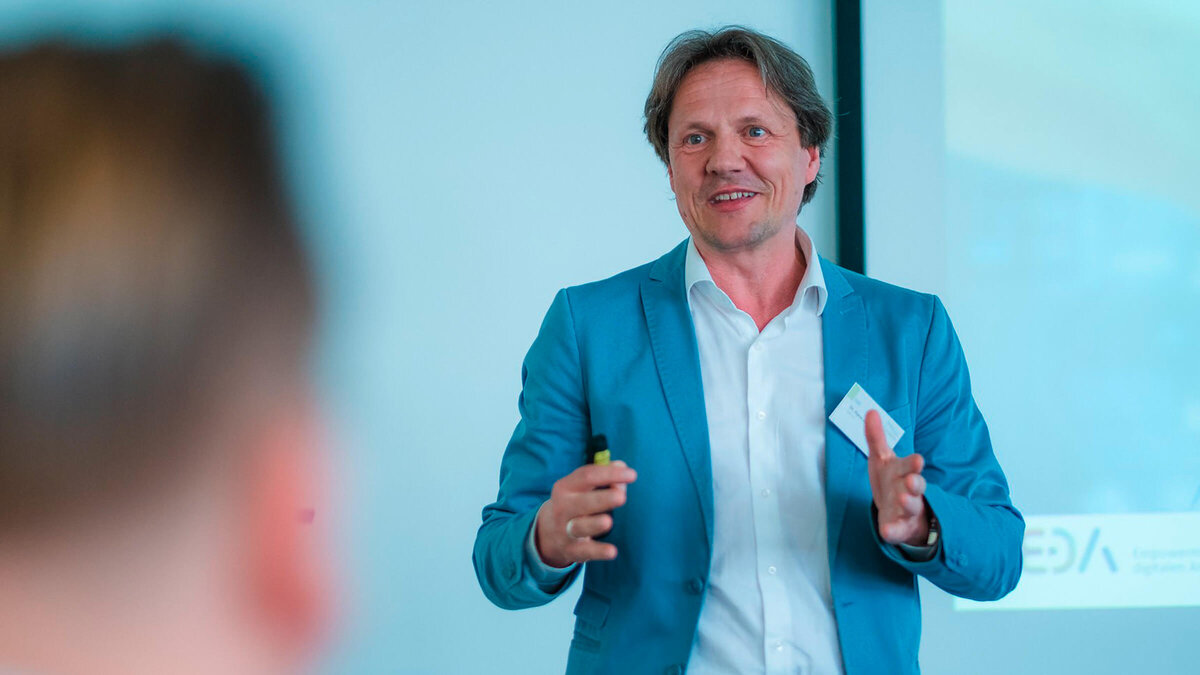
What trends do you currently see in change management within organisations?
a) Agility: Companies are increasingly relying on agile methods to be able to respond more quickly to change. This means they have flatter hierarchies, make decisions more quickly and adapt their processes.
b) Digitalisation: Digitalisation has also transformed change management. Companies are using digital tools to plan and implement change processes. Communication and collaboration within the context of change processes are also increasingly taking place digitally.
c) Cultural change: Companies are paying greater attention to their corporate culture and working to transform it. The aim is to create a culture of openness, transparency and collaboration.
d) Stakeholder management: Stakeholder management is absolutely crucial for taking into account the interests and needs of all those involved and incorporating them into the change process.
e) Sustainability: Sustainability issues are increasingly being integrated into change processes in order to shape changes in such a way that they are environmentally and socially sustainable.
f) Leadership: The role of managers in change management is becoming increasingly important. They must initiate, steer and communicate the change process. In doing so, it is also essential to convey trust and credibility.
g) Data analysis: Data is also increasingly being used in change management to steer and optimise the change process. Organisations rely on data analytics to measure and adjust the progress of the change.
Let’s move on to the first trend you mentioned. Is agility a ‘panacea’, or what do companies need to bear in mind here?
Practical examples clearly demonstrate that a hasty push towards ‘agility’ leads to instability! And not only that: when everything is turned upside down all at once, the result is a loss of direction. The entire organisation begins to falter, as it risks losing its internal stability and identity. This brings the concept of ‘ambidexterity’ into focus. Ambidexterity means creating something new whilst preserving what has been tried and tested. It forms the foundation for radically questioning and renewing parts of the existing core business. At the same time, tried-and-tested products and processes must be continuously developed and optimised, as this is where companies generate the revenue needed to invest in future products and services. Ambidexterity therefore means nothing other than innovation whilst business continues as usual. And this is becoming increasingly important in today’s world.
Against this backdrop, what must a targeted and responsible change consultancy achieve?
a) Analysis of the situation: Before changes can be proposed, the current situation must be analysed. This should involve identifying the strengths and weaknesses of the company or organisation so that the changes can be tailored to the company’s needs and requirements.
b) Clarification of the objective: It is important that the objective of the change is clearly defined. What is to be achieved? What results are required? The objective should be specific, measurable, achievable, relevant and time-bound.
c) Involving all stakeholders: Change management can only succeed if all relevant stakeholders are involved, such as employees, managers, customers and suppliers. Each stakeholder has different requirements and needs that must be taken into account.
d) Developing a plan: The plan sets out key milestones but is agile, meaning it is continually adapted during retrospectives. This is also where potential obstacles and risks are identified, along with measures to manage the process.
e) Communication: Finally, effective communication is crucial to the success of change processes. And I would like to add: it is becoming increasingly important in these uncertain times. For me, communicating well means, on the one hand, fostering participation and commitment, and on the other, creating a sense of security, predictability and transparency for employees.
Do you have any advice on how companies can internalise the process of constant change?
Many companies and organisations are constantly on the move, yet they’re not really heading anywhere. I like to call this ‘racing in place’. That’s why periods of self-reflection are so important: this is how self-renewal begins. This involves taking time out, of course, but also workshops, coaching sessions and training courses to reflect on where the company stands and where it wants to go. In principle, the capacity for renewal cannot be introduced through a – seemingly simple – ‘revolution’. Companies must remain committed to this in the long term.
Dr Hans-Joachim Gergs works as a senior consultant for Audi in Ingolstadt. He also lectures at the Technical University of Munich and at the universities of Heidelberg and Regensburg.