


Interview:
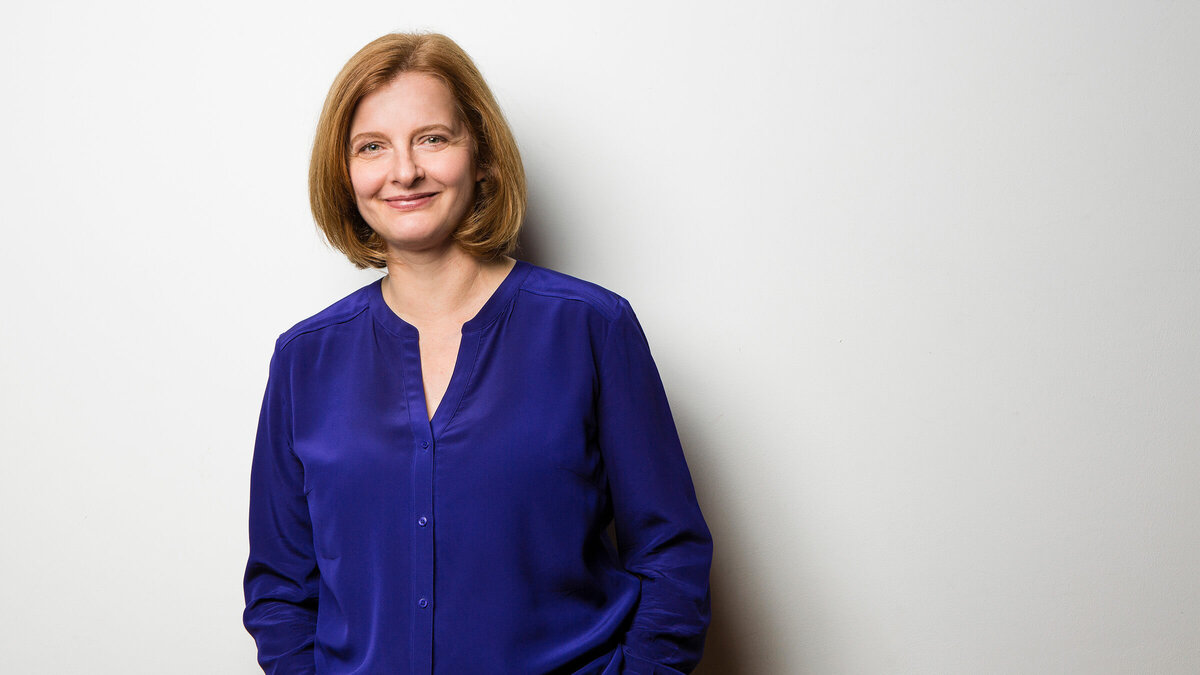
Organisational development specialist Ulrike Führmann
As a consultant, you have insight into various organisations: in your experience, how important is internal communication within companies?
Ulrike Führmann: I find that the importance varies greatly. I cannot generally confirm the widely held view within the community that internal communication has become significantly more important since the coronavirus pandemic. When I’m approached by clients as an external consultant, the company – or at least the person commissioning the work – is already aware of the importance of internal communication. However, this isn’t necessarily reflected in the budgets. I still see a great deal of financial pressure in this area. But I don’t think you need huge budgets at all. There are plenty of ways to communicate effectively internally. A communication strategy, for example, is a great help here.
In your experience, where is internal communication embedded within a company?
Ulrike Führmann: That varies from company to company. It is often situated alongside external communications under the umbrella of corporate communications. Meanwhile, the two disciplines are increasingly merging. However, I find this practice suboptimal, as there are significant differences in the target and reference groups, as well as in the impact the communication aims to achieve. Time and again, I also come across companies that are setting up an internal communications department and placing it directly as a staff function reporting to senior management. A good approach – in my view. Coordination with senior management is then streamlined. I also consider the link to corporate development to be sensible, as this allows objectives and strategy to be effectively communicated internally. And here’s another approach I favour: as I see internal communication as a key driver of organisational development, I find it particularly useful when it is also based within that department – if one exists.
What are the expectations placed on internal communications? Have these changed?
Ulrike Führmann: When it comes to expectations, I like to look at four aspects:
- The organisation:
When it comes to the organisation, I ask myself: What does the company need to remain fit for the future, and how can internal communication contribute to this? - The environment:
When it comes to the environment, I look at current events affecting the organisation and what internal communication needs to respond to. One example is the COVID-19 pandemic, which originated externally and required a rapid adaptation of communication channels. - The staff:
When it comes to the staff, I ask: What information and communication do staff need to do their jobs as effectively as possible? - Customers:
Finally – perhaps an unusual but important point – the customers. This is primarily about the points of contact between staff and customers. For example: what information does a sales representative need to be able to communicate effectively with the outside world? Here, too, those responsible for communication can provide valuable support.
What topics are currently on the agenda for internal communications?
Ulrike Führmann: Some topics are perennial favourites in internal communications – these include digitalisation, ‘New Work’ and agility. When it comes to agility, I’m currently seeing two contrasting trends: whilst agile working has become the norm in some organisations, a sense of disillusionment or even disappointment is spreading in others.
A topical issue is the integration of artificial intelligence into communication processes. Many communications managers face the challenge of using AI effectively and making the best possible use of its potential in their day-to-day work. At the same time, the increasing strain on employees is coming ever more into focus – whether due to a genuine increase in workload or a subjectively perceived additional burden. This issue will certainly continue to occupy us, particularly in the context of Germany’s future as a business location and the discussion surrounding staff motivation.
Furthermore, geopolitical developments are currently having a particularly intense impact on businesses. Whilst the effects vary in severity depending on the sector and location, they are presenting many organisations – and thus internal communication as well – with new challenges. These include, for example, rising raw material prices, uncertainties regarding production sites, and an increase in cyberattacks.
Change seems to be a key theme in internal communications. How would you define change communication? Do you see it as a specialised form of internal communications?
Ulrike Führmann: For me, it is not so much a special form of internal communication as a distinct area of communication in its own right. Internal communication focuses on ‘day-to-day communication’, whilst change communication comes into play during periods of change. It supports the change process through communication and fosters understanding of new or different decisions, strategic directions, processes and so on. It ensures that staff receive all the information they need to continue working effectively. It also ensures that they can contribute their own ideas and suggestions, provided that participation is both desired and appropriate.
You are not only an expert in internal communication but also a systemic coach. What added value does the systemic approach bring to internal communication?
Ulrike Führmann: I discovered the systemic approach for myself almost 20 years ago and trained at all levels of the system – as a coach, supervisor, team developer and organisational consultant. In doing so, I distinguish between the systemic and the systems-theoretical approaches. The systemic approach describes the mindset – characterised, amongst other things, by a focus on the mandate, objectives and resources. The systems-theoretical approach forms the theoretical basis. It enables measures and interventions to be justified on a sound basis, rather than acting intuitively.
This knowledge helps us to better understand internal organisational phenomena and respond to them in a targeted manner. For example: why do change processes in companies so often fail? Or why is it not enough simply to want to change employees’ ‘mindset’ – and why such an intervention is actually intrusive? For communicators, it is particularly fascinating that, according to systems theorist Niklas Luhmann, organisations consist of communication. Anyone wishing to change organisations must therefore start with communication.
At present, I am observing that the wave of agility is being replaced by a systemic wave. I am pleased about this, as the systemic and systems-theoretical perspective is extremely valuable for change within organisations and the design of internal communication. At the same time, I see a risk that this approach may degenerate into a mere fad, meaning its enormous potential is not fully realised. Whether it is a passing trend or a sustainable approach, it is well worth all communications professionals engaging with it in depth.

“Internal communication is effective when we draw on insights from other disciplines. The systemic approach captures organisational dynamics and enables targeted strategies.”
Nadja Ismail
+49-911-530 63-111
nis@kaltwasser.de
https://www.linkedin.com/in/nadja-ismail