


Key factors for successful digital staff communication in 2020
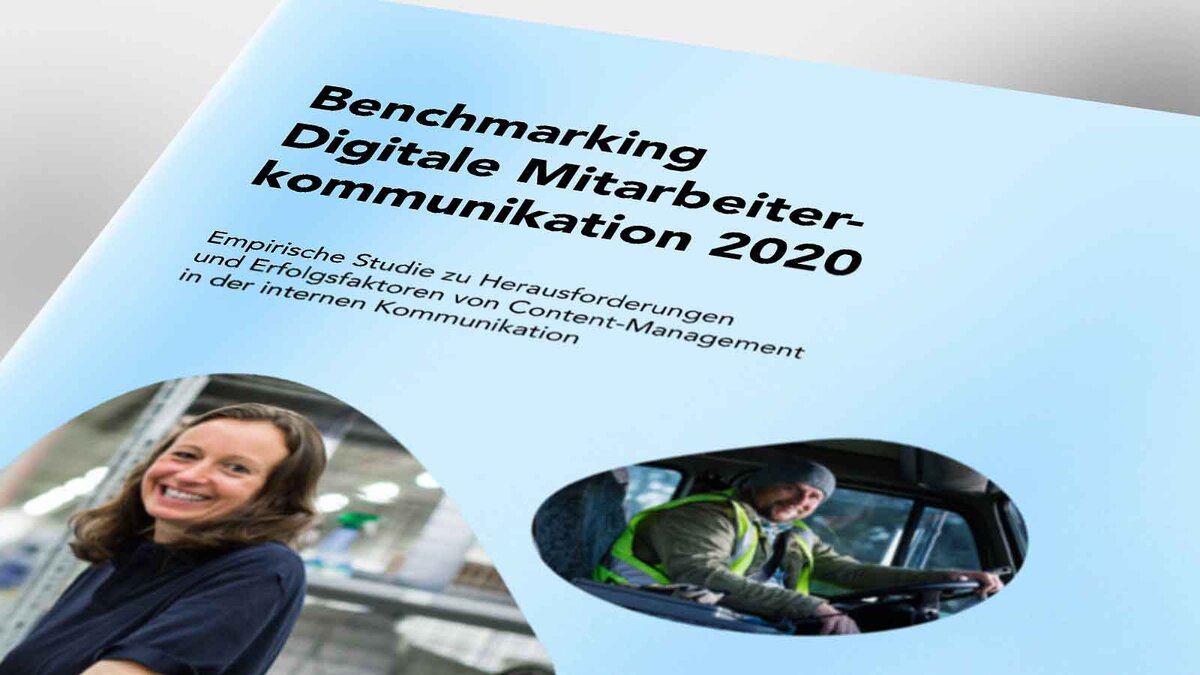
We have compiled the key success factors for ‘Digital Employee Communication 2020’:
- Content: Old gold retold “Content
is king” – even though many communications managers have heard this truism a thousand times over, they are often at a loss when it comes to the question of good content: They often fail to see many ‘trees’ that are of particular interest to staff.
Yet they can capitalise on this shift in perspective by directly involving the people in their organisation: employee-generated content creates authentic and engaging material, motivates staff and boosts interaction rates. Just like influencers on YouTube or Instagram, executives, team leaders and ordinary staff can achieve considerable internal reach by acting as catalysts and role models. And whilst we’re at it, it’s worth adopting a third perspective: an outside view identifies internal, industry-wide and societal issues, enabling us to think outside the box. Or to put it another way: where there’s a forest, we’ll find a clearing for a picnic. - Evaluation: The missed opportunity
The internal communication campaign is in place, the messages have been delivered, the finish line is in sight – and yet many communicators are still standing still, particularly at this stage. Why? Although digital platforms are designed to track all (inter)actions in a measurable way, many organisations still fail to carry out sufficient evaluation of their communication measures. Even though this is already the second truism, many communications managers continue to miss the opportunity at this stage to get to know their staff better and to consistently align their content management with users’ needs. So: don’t stand still. See it through. - Resources: The Return on Investment
Many companies want motivated staff, acceptance of and commitment to future-proof structures, and a spirit of innovation and entrepreneurship. But to achieve this, the company must also have the means to explain its plans to its staff. One thing is clear: integrated, orchestrated communication requires resources. Particularly in an age of user- and employee-generated content, it is essential for corporate communications to manage key information. This is the only way to ensure that employees actually receive all the information they need to deliver optimal value. This requires processes and tools (such as editorial tools, interfaces or quality management) that enable this control. On this basis, even in uncertain times, companies are able to empower their staff in their day-to-day work, convey appreciation and position themselves as attractive, modern employers in the competitive landscape. This is how aspirations can become reality.
Last December, we too invited people to take part in the study. A total of 371 communications managers took part in the study, creating an exceptionally robust data set for the survey. Thank you very much!
Your contact person

In 2020, internal communication
relies more than ever on its content.
Andreas Schauerte
+49-911-530 63-117
asc@kaltwasser.de
https://www.linkedin.com/in/andreas-schauerte-kk