


Successful change requires good communication
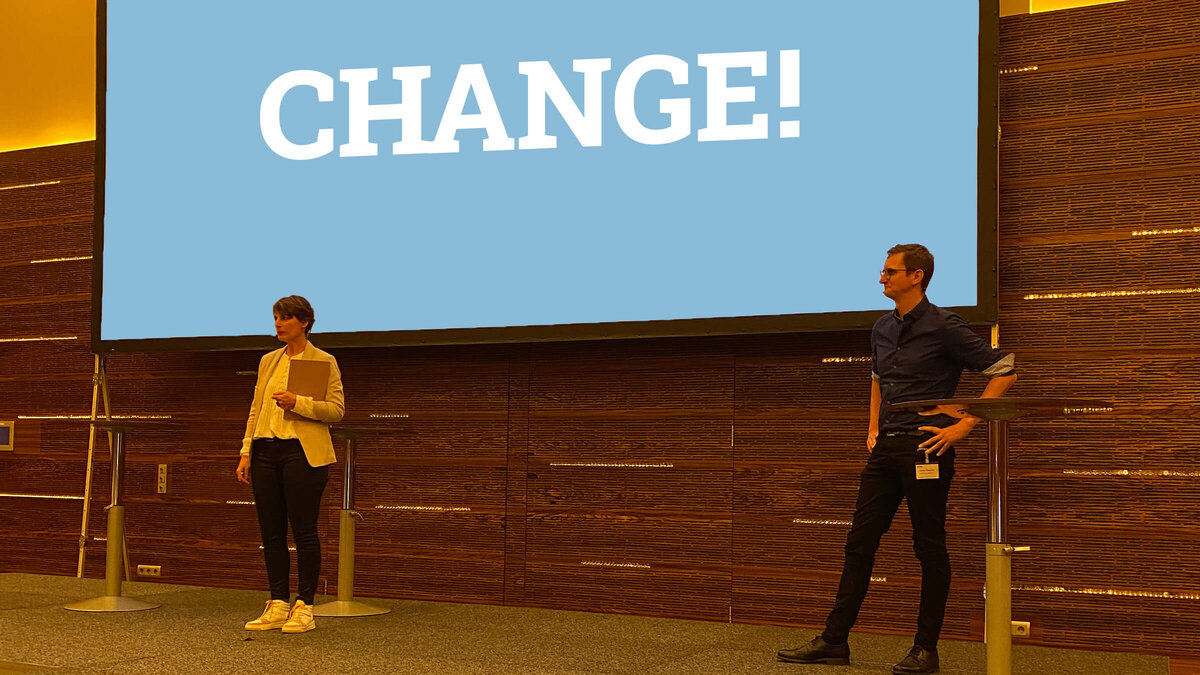
Regardless of a company’s current approach to communication, there is often a clear understanding of what effective and targeted communication can and should achieve. In fact, in times of change – just as in ‘traditional’ corporate communication – a strategy is required, along with a precise understanding of the target audiences, appropriate messages and effective communication channels. However, particularly in times of change, there is often an overestimation of what corporate communications can achieve beyond its day-to-day operations. Furthermore, employees – and managers in particular – are expected to simply go along with the change. And that everyone will come on board as long as the facts and benefits are communicated clearly.
Take fears seriously and harness resistance
Every change triggers fears and resistance in people. And these are justified, as they follow a personal logic: the loss of one’s own position or carefully built networks, or the fear of not being good enough. On top of this, middle managers in particular are often themselves inadequately informed about changes or are even affected by them, and are therefore unable to fulfil their communicative role to the extent required.
This is where change communicators come into play: they support and empower ‘traditional’ communication experts by analysing fears and resistance and using them strategically to help ensure the success of the change. After all, only those who understand the needs, motivations and capabilities of staff and managers can develop the appropriate strategies to take everyone along for the journey and, ideally, even inspire ‘enthusiasm’ for the change. In most cases, however, the first objective is for the colleagues affected to understand why the change is necessary, what it means for them personally, what contributions they can make, and what the next steps are on the path to the vision.
To foster this understanding, change communicators translate the corporate or changestrategy into a ‘change story’ that employees can understand. For this story to sustain the change in the long term, it should be rooted in the company’s history, consistent and authentic. This also means that, in order for the change story to be formulated as clearly as possible for employees and told in a way that inspires action, it must be guided by the company’s cultural characteristics and closely tailored to the target audience.
Resonance and authenticity
Change communicators therefore look deep into the ‘engine room’ of an organisation. They ‘take the pulse’ and pick up on the grapevine to find ways and means – such as more dialogue, networking and participation – to forge a connection between employees and the change and make them an active part of the transformation: as strategic ambassadors, protagonists in storytelling or as providers of feedback. The development and implementation of communication measures also take place in close consultation with the change team or a sounding board comprising selected employees – because anyone who strikes the wrong note, glosses over changes or provides insufficient information on project progress has already lost the battle.
To communicate the change as effectively and successfully as possible, the individual measures should be seamlessly integrated into the context of corporate communications, and their design and implementation should be based on specific experience, utilising the channels and expertise of corporate communications. After all, sometimes change simply needs a long-awaited message from the CEO or a sympathetic ear from management.
Change requires trust and collaboration
For change communicators to fulfil their role, they must not only be close to the staff but also be able to address uncomfortable feedback from the workforce directly. Otherwise, the project quickly runs the risk of losing its credibility. To do this, they need, on the one hand, a close line of communication with change project management and senior management. They also need reliable and trusting links to the other key drivers of change: corporate communications, organisational development, the HR department and the works council.
Whether the change communicators are based in-house or brought in as external consultants, the combination of traditional communication skills and sound change management expertise enables corporate communications to win the long-term trust of employees in the change process.

“Experience, empathy and expertise are crucial in change management for building the necessary trust amongst staff and managers as they work towards the shared goal of transformation.”
Andreas Schauerte
+49-911-530 63-117
asc@kaltwasser.de
https://www.linkedin.com/in/andreas-schauerte-kk