


Is this really change, or can we do without it? Trends emerge, create a buzz, and often disappear and are forgotten after a short time. Many a trend turns out to be new wine in old wineskins. Wrapped up in grand-sounding Anglicisms, they sound like something completely new, yet they describe challenges that we have, in some cases, been grappling with for decades. We’ll be looking at two of these trends here – trends that can bring about lasting change in communication and will continue to do so.
The Opportunities of Virtual Communication -
New Approaches to Corporate
Communication
Here to stay
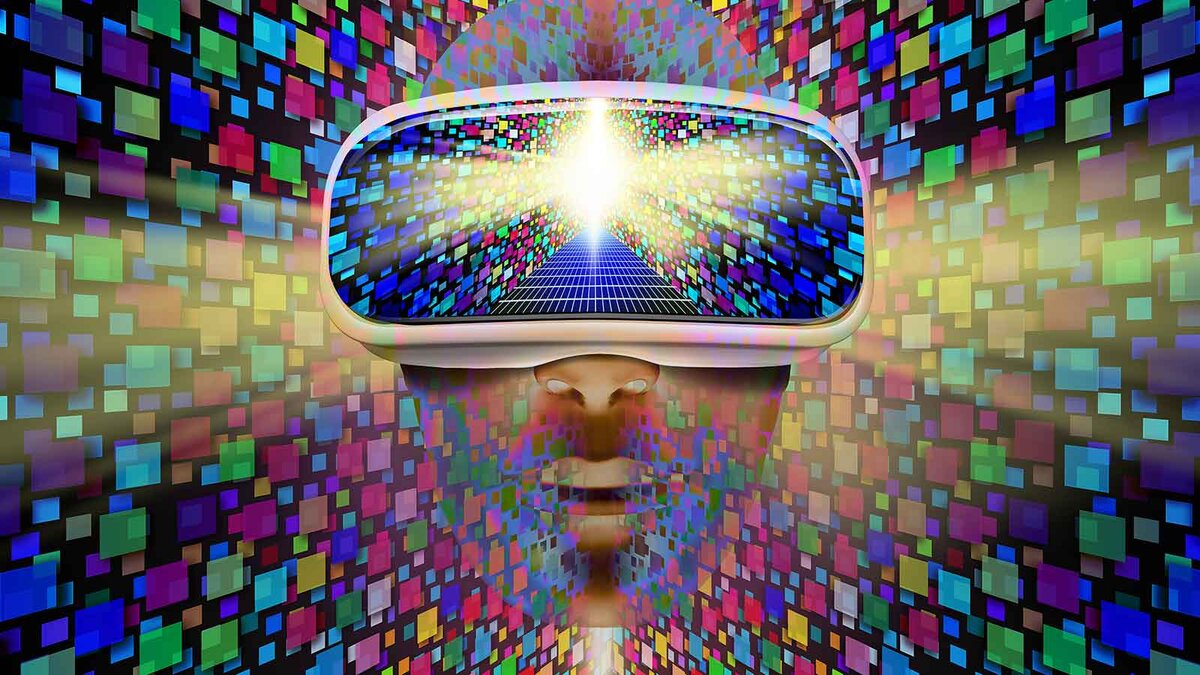
VR and AR have permanently changed the way we consume media. Companies such as Meta are developing virtual worlds, and Second Life recently announced a revival. According to a study, 40.3 per cent of German companies are already using VR and AR, and a further 32.8 per cent plan to do so in the near future*. Alphabet, Microsoft, Samsung and Apple are increasingly entering the market on the hardware side. The development of the VR and AR market in recent years shows that this is no longer merely a trend. The influence of this technology is felt in many areas:
- Smart homes can be efficiently planned and developed in virtual worlds.
- In industry, both VR and AR are used for the development and repair of machinery.
- In communications technology, both VR and AR are being used more and more, whether in the development of data streams or in the visualisation of technical features.
- AI-driven chatbots – some of which are highly realistic – are already replacing some call centre agents at customer touchpoints.
- Many brands and shops (e.g. LEGO) are already using AR features on their packaging to bring it to life. Something similar is happening with AR mirrors in clothes shops or virtual glasses at online opticians.
- The medical sector has long relied on VR and AR when it comes to complex operations or the education and training of staff in difficult procedures involving patients.
- In the entertainment sector, VR and AR are extremely popular thanks to the interactive involvement of the user and have become indispensable.
The ever-improving coverage of robust data networks across the country and the increasing power of devices further amplify this effect. Experiencing virtual worlds in real time and interacting with one’s surroundings in augmented reality in entirely new ways now works seamlessly in most regions. Being able to experience AR and VR so smoothly is leading to growing acceptance of the technology.
Virtual communication in corporate communications
But how can businesses use VR and AR for innovative communication, both externally and internally? AR and VR can be used in highly creative ways to engage customers, service providers, partners and staff at various stages of awareness:
- Staff can be invited to events in virtual spaces. Instead of a ‘normal’ staff meeting, you could embark on a virtual adventure with employees and convey what would otherwise be dull content in a playful way.
- Within companies, information and data could be distributed via AR points, and staff could collect these using their mobile phones to unlock bonuses. This is a playful way to convey complex processes or the company’s historical background.
- In these times of working from home, virtual onboarding concepts can ensure that the employee experience is a positive one from day one.
- The press can be taken on a virtual tour where, for example, I can explain products in a way that wasn’t possible before. A guided tour of a hearing aid, including a visit to the human inner ear? Here you go! A high-speed flight through a power line, with brief stops at key points along the way? A creative way to convey complex and often dry content.
VR and AR offer us, as creatives, a unique opportunity to bring content to life in an exciting, emotional and entertaining way. As communications professionals, it therefore makes sense to adopt a holistic approach when developing communications strategies for businesses. Away from text alone, towards a holistic, experiential approach to communication – or as the American philosopher Henry David Thoreau put it:
The world is nothing but a canvas
for our imagination.”
However, VR and AR should never feel contrived or forced. They must fit in with the DNA of the respective company within the context of other communication channels. For tech-savvy and creative companies, VR and AR can open up opportunities to reach additional target audiences. Our task is to develop the best possible communication solution for the company.
Brief explanation: The difference between VR and AR
Virtual Reality (VR) enables users to experience a virtual 360-degree world, view it from all angles, move around within it and interact with it.
Augmented Reality (AR), literally ‘enhanced reality’, is a digital technology in which reality – that is, everything you can currently see – is supplemented with additional information in the form of text, graphics, animations, videos, and static or moving 3D objects.
(Source: Magic Holo)
* Augmented & Virtual Reality Study | Published by IDG Business Media GmbH and PTC Parametric Technology GmbH
Your contact person

Communication strategies are evolving away from purely textual constructs towards storyboards that can be experienced holistically
Andreas Schauerte
+49-911-530 63-117
asc@kaltwasser.de
https://www.linkedin.com/in/andreas-schauerte-kk