Keep a cool head when the temperature drops! During this year’s nationwide crisis management exercise, LÜKEX, public authorities and gas suppliers are practising for a real-life emergency.
Our argument: Energy policy projects require public engagement – especially in times of crisis!
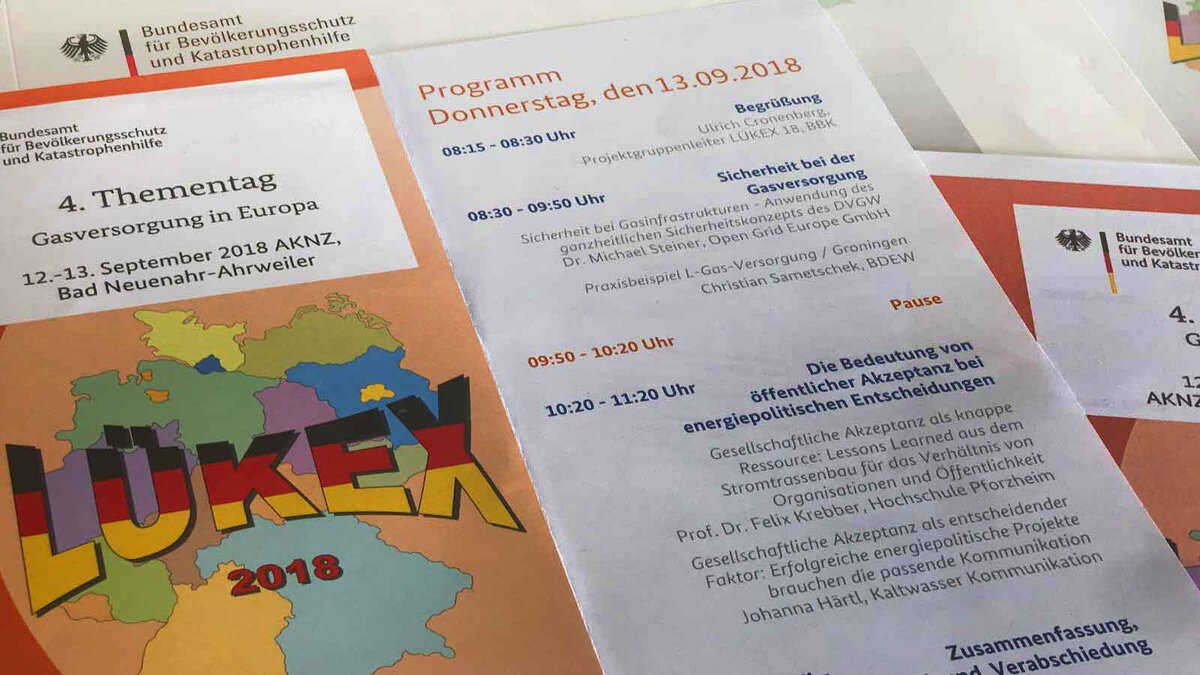
Johanna Härtl from our Public Engagement team spoke about the importance of public acceptance for energy policy projects. Her argument: Energy policy projects can fail due to a lack of public acceptance – especially in the event of an acute crisis. Every energy policy project requires well-thought-out and appropriate communication. In the event of a disaster, authorities and utility companies must be able to count on the support of the country’s population. After all, if the gas supply collapses and the public doubts the advice issued by the authorities, chaos can ensue, further exacerbating the crisis.
‘Trust’ is a currency that must be earned through sustainable communication
What authorities and companies need in a crisis to reach the public and retain the freedom to act is acceptance, reputation and trust amongst the population. Only those recognised by the public as legitimate authorities – and with whom citizens feel they are in good hands – will be able to remain in control even in a crisis. Authorities and companies must not take this trust for granted. Survey results show that government authorities, company representatives and even the media do not enjoy a high level of esteem amongst the public. In contrast, public trust is highest in firefighters and doctors – which, whilst not harmful in a crisis, does not help the authorities’ crisis management efforts.
What does help is a long-term communication strategy that brings citizens and the authorities responsible for responding to disasters closer together – and does so even before a crisis strikes. So that citizens know they can rely on the authorities and energy suppliers when the need arises, and so that the authorities and suppliers know that citizens’ behaviour is not a completely unknown quantity, public engagement can help to build trust and reduce the element of uncertainty.
Of course, there is no magic formula for effective public relations, but if public communication is to bear fruit in the long term, it must meet the following criteria:
- proactive and open to dialogue
;- timely and long-term
;- tailored to the target audience and delivered via the appropriate channels
;- clear and simple
;- respectful and citizen-centred
;- sincere and truthful
Services: Public engagement and crisis communication