Where do professional decision-makers go for information?
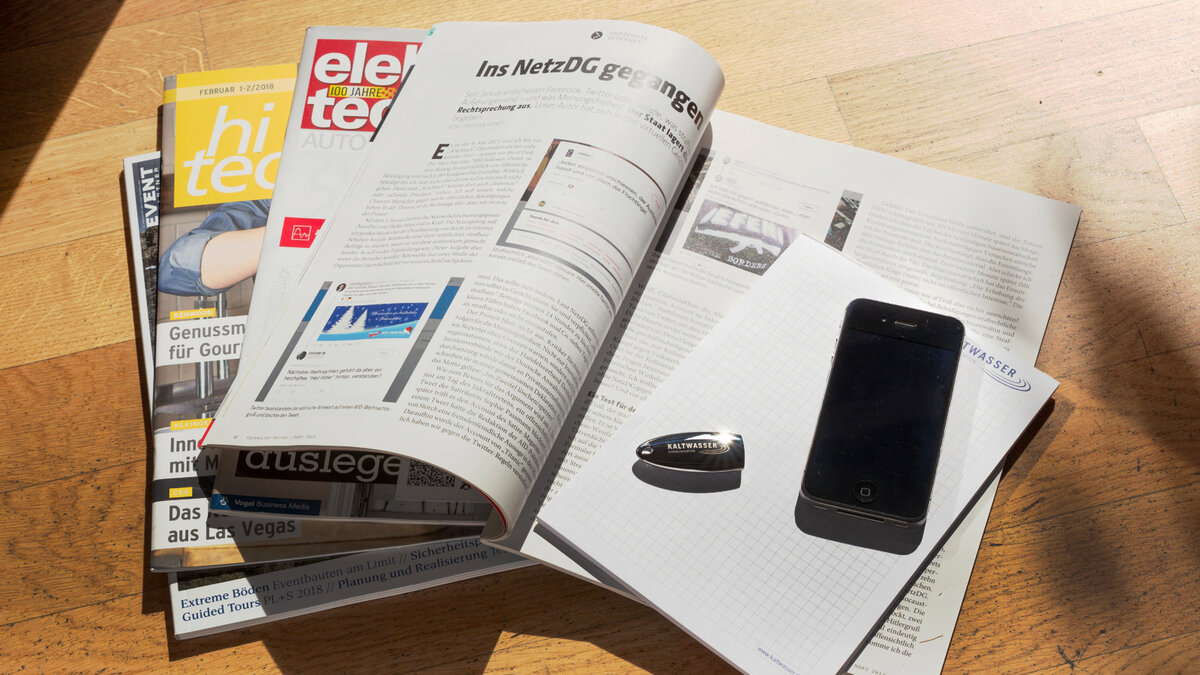
Feature article
This is one of the key findings of the 2015/16 B2B Decision-Makers Analysis conducted by Deutsche Fachpresse. This is because 94 per cent of the core target group use print or digital trade media, particularly trade journals. Specialist articles are not only written by editorial teams, but often by external authors as well. These may be freelance editors and journalists, but also marketing managers or communications professionals.
But what makes a good specialist article?
In her bachelor’s thesis, our colleague Sarah Schöffler examined precisely this topic and came to the following conclusion: guest and author contributions in B2B trade journals only partially meet the criteria of quality journalism.
Criteria such as clarity and appeal are almost always met. However, professional selection criteria, transparency, citation of sources and source criticism – in other words, the hallmarks of quality journalism – are often pushed into the background.
Our view
When writing a good specialist article, it is therefore important to remain objective. This means avoiding superlatives, half-truths and exaggerated phrases such as ‘market leadership’, ‘technological breakthrough’ and ‘ground-breaking solution’. A fundamental requirement for a good article is also that the author always puts themselves in the readers’ shoes and considers what information they need and for what purpose. Above all, the technical article should pursue the following aim: it should make statements about solutions and approaches – thereby minimising the risk associated with every decision taken by professional decision-makers. Et voilà.
Read more:
Service: Product communication
Reference: Press and public relations for Siemens